Nutral Conference in Religious Studies Evaluation on Digital Revolution
Scopes
Digital religious literacy and online theological studies
Innovative pedagogies for faith-based education in the digital era
Virtual classrooms, e-learning platforms, and open religious resources
Integration of artificial intelligence and data-driven tools in religious education
Development of inclusive digital curricula for theological training
Preservation of religious knowledge through digital archives and platforms
Enhancing access to religious knowledge through digital platforms
Technology for interfaith dialogue, mutual understanding, and cultural diversity
Bridging rural–urban gaps in access to spiritual and religious education
Empowering marginalized and underrepresented groups through digital inclusion
Gender equity in digital religious education
Addressing the digital divide in faith-based communities
Faith-based contributions to digital citizenship and social cohesion
Role of religious institutions in promoting harmony in smart and connected cities
Digital tools for strengthening local wisdom, community traditions, and spiritual practices
Preservation of religious heritage through digital transformation
Building sustainable interfaith communities in urban digital spaces
The role of religion in fostering resilience and social sustainability
Legal, ethical, and moral frameworks for digital religion and technology use
Religion’s role in countering online extremism, hate speech, and radicalization
Promoting digital ethics and integrity in faith-based communication
Governance of online religious institutions and digital congregations
Interfaith collaborations for peacebuilding through technology
Transparency and accountability of religious organizations in the digital age
Global collaboration in digital religious studies research
Partnerships between academia, religious institutions, and technology providers
Public–private cooperation for inclusive religious technology initiatives
Knowledge-sharing networks for faith and technology innovation
Interdisciplinary research alliances on religion, ethics, and digitalization
International cooperation on preserving cultural and spiritual knowledge digitally
Welcome to Reliev
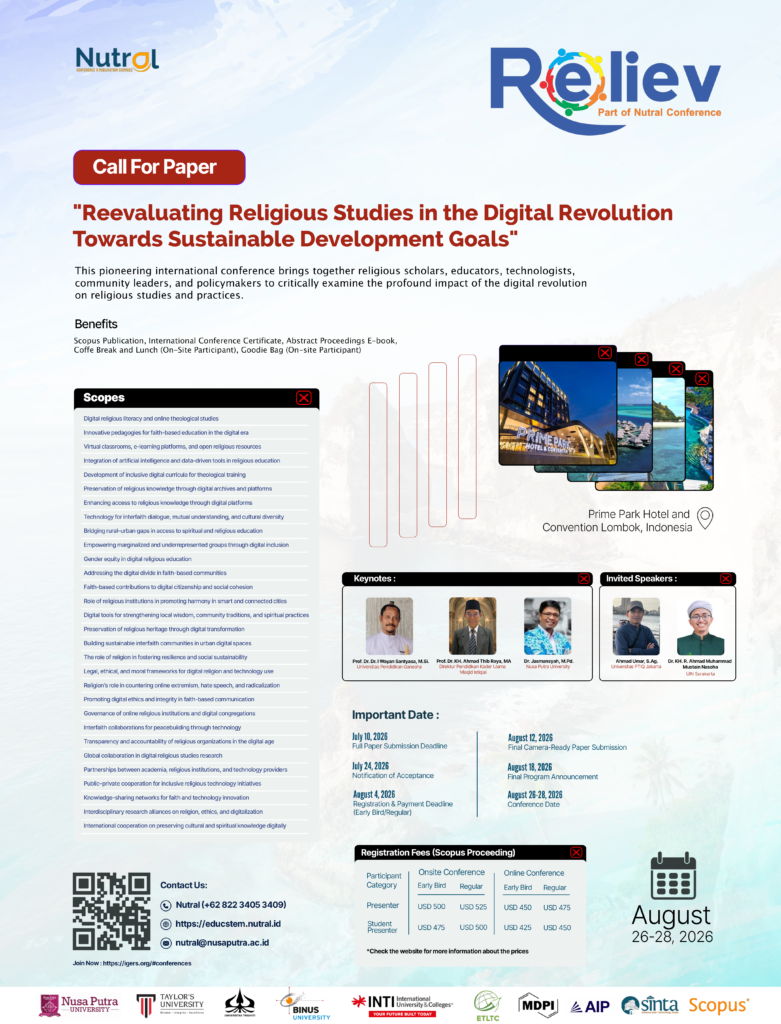
Welcome to the Nutral Conference in Religious Studies Evaluation on Digital Revolution (Reliev 2026), themed “Reevaluating Religious Studies in the Digital Revolution Towards Sustainable Development Goals”. This pioneering international conference brings together religious scholars, educators, technologists, community leaders, and policymakers to critically examine the profound impact of the digital revolution on religious studies and practices.
Reliev 2026 is dedicated to exploring how the intersection of faith and technology can contribute meaningfully to the United Nations Sustainable Development Goals and foster a more harmonious global society. The conference will showcase insightful research and innovative digital applications in religious contexts, highlighting the transformative role of digital tools in advancing quality education (Sustainable Development Goal 4) and reducing inequalities (Sustainable Development Goal 10) through enhanced access to religious knowledge and interfaith dialogue. Furthermore, Reliev 2026 emphasizes the crucial role of religious perspectives in building peace, justice, and strong institutions (Sustainable Development Goal 16), contributing to sustainable cities and communities (Sustainable Development Goal 11), and strengthening global partnerships (Sustainable Development Goal 17) through collaborative digital initiatives.
Join us in this vital dialogue to shape a future where religious wisdom and digital innovation converge to build a more inclusive, peaceful, and sustainable world.
Publication Opportunity
As part of our commitment to enhancing the quality and visibility of scholarly work, this conference collaborates with the ETLTC Conference Series for proceedings publication. Selected articles that have undergone peer review and fall within the scope of the ETLTC Conference Series will be published in their proceedings, as has been practiced in previous conferences.
The ETLTC Conference Series has established partnerships with Engineering Proceedings (MDPI) and AIP Publishing, both indexed by Scopus, offering a broad opportunity for researchers to publish their work in reputable international outlets.
Since not all research fields can be accommodated under the ETLTC Conference Series, the organizing committee is currently in the process of establishing contracts with additional publishers, including Scopus-indexed proceedings and reputable journals (Scopus-indexed / Nationally Accredited by Sinta), in accordance with the relevance of specific research fields.
Detailed information regarding the publication aims and the list of official publication outlets will be announced on the website once the contracts with the respective publishers have been finalized.
Scopes
Digital religious literacy and online theological studies
Innovative pedagogies for faith-based education in the digital era
Virtual classrooms, e-learning platforms, and open religious resources
Integration of artificial intelligence and data-driven tools in religious education
Development of inclusive digital curricula for theological training
Preservation of religious knowledge through digital archives and platforms
Enhancing access to religious knowledge through digital platforms
Technology for interfaith dialogue, mutual understanding, and cultural diversity
Bridging rural–urban gaps in access to spiritual and religious education
Empowering marginalized and underrepresented groups through digital inclusion
Gender equity in digital religious education
Addressing the digital divide in faith-based communities
Faith-based contributions to digital citizenship and social cohesion
Role of religious institutions in promoting harmony in smart and connected cities
Digital tools for strengthening local wisdom, community traditions, and spiritual practices
Preservation of religious heritage through digital transformation
Building sustainable interfaith communities in urban digital spaces
The role of religion in fostering resilience and social sustainability
Legal, ethical, and moral frameworks for digital religion and technology use
Religion’s role in countering online extremism, hate speech, and radicalization
Promoting digital ethics and integrity in faith-based communication
Governance of online religious institutions and digital congregations
Interfaith collaborations for peacebuilding through technology
Transparency and accountability of religious organizations in the digital age
Global collaboration in digital religious studies research
Partnerships between academia, religious institutions, and technology providers
Public–private cooperation for inclusive religious technology initiatives
Knowledge-sharing networks for faith and technology innovation
Interdisciplinary research alliances on religion, ethics, and digitalization
International cooperation on preserving cultural and spiritual knowledge digitally
I Wayan Widiana is an academic and professor in the field of Educational Research and Evaluation at Universitas Pendidikan Ganesha. He completed his bachelor’s degree in Physics Education at Undiksha, his master’s degree in Educational Research and Evaluation, and his doctoral degree in the same field at Universitas Negeri Jakarta. His academic career includes positions as a lecturer in the Elementary School Teacher Education Study Program, Expert Staff to the Rector, Head of the Journal and Publication Center, Head of Simkatmawa, Head of the PKM Team, Secretary of PPG, Head of the Professor and Associate Professor Acceleration Team, and Vice Dean II of the Faculty of Education. He has contributed to the development of scientific publications and is actively involved as a reviewer, assessor, and editor of national and international journals.